Last updated November 21, 2026
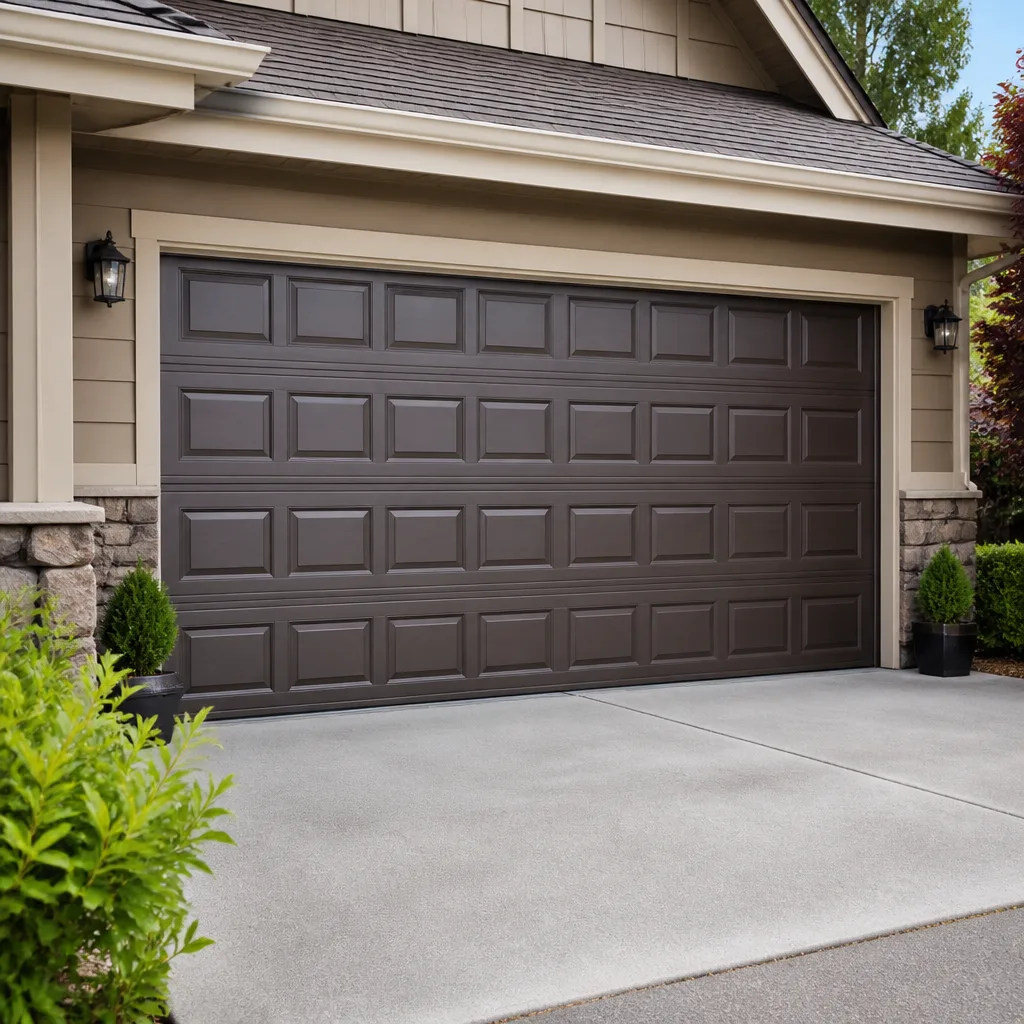 Raised-panel steel
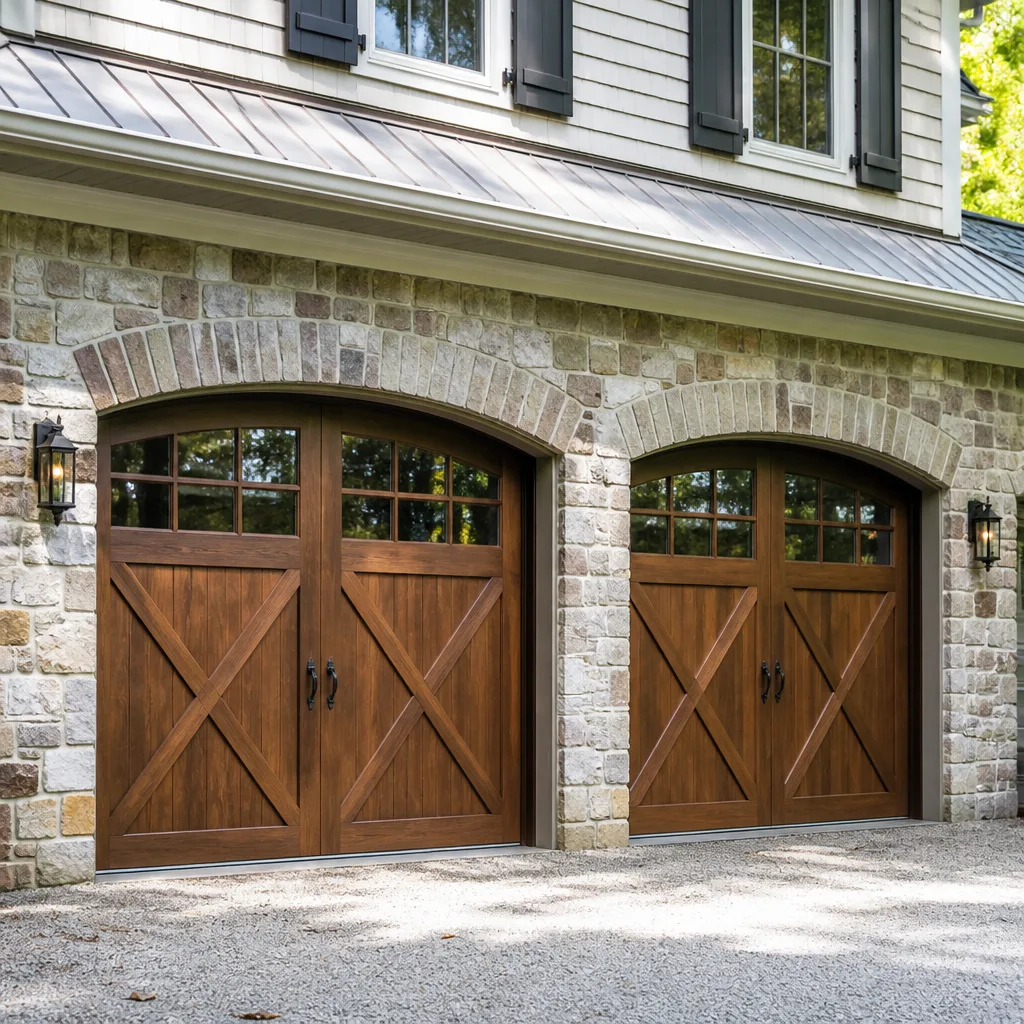 Carriage house
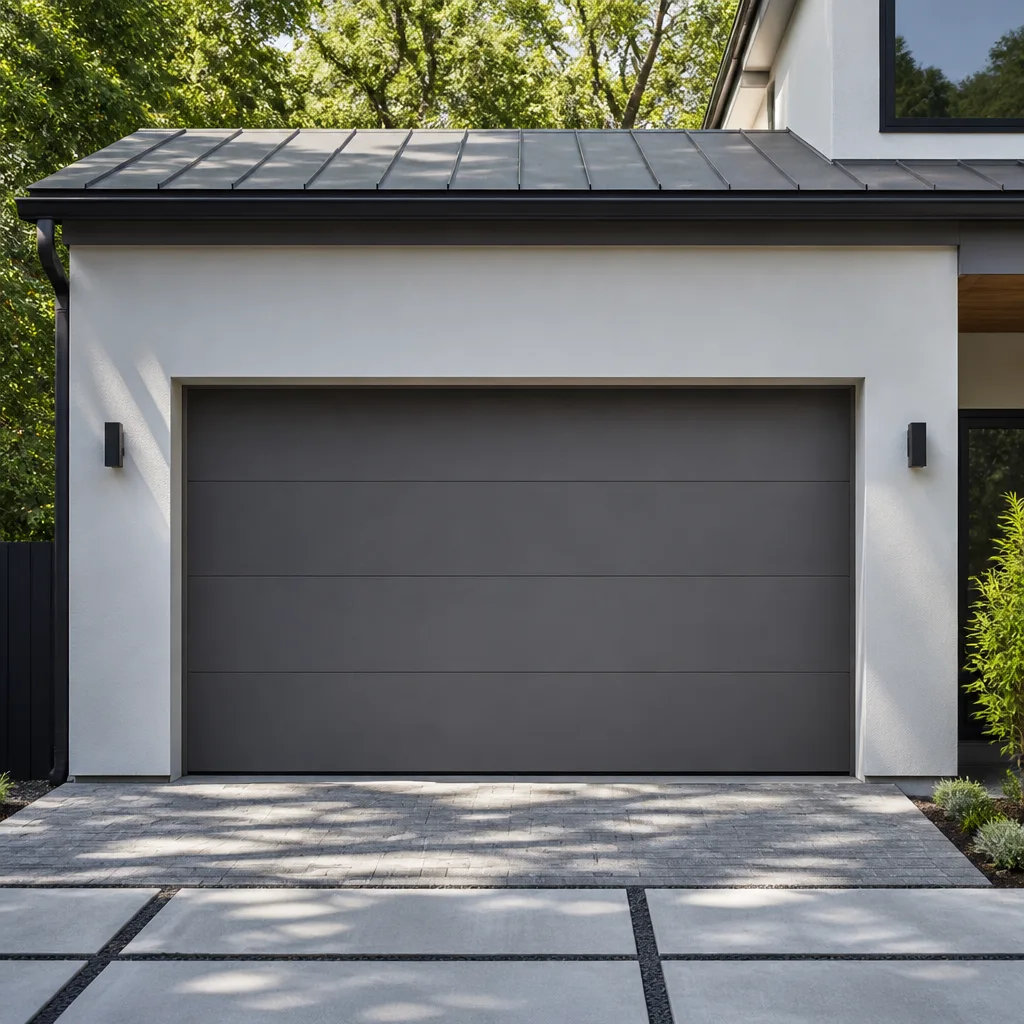 Modern flush
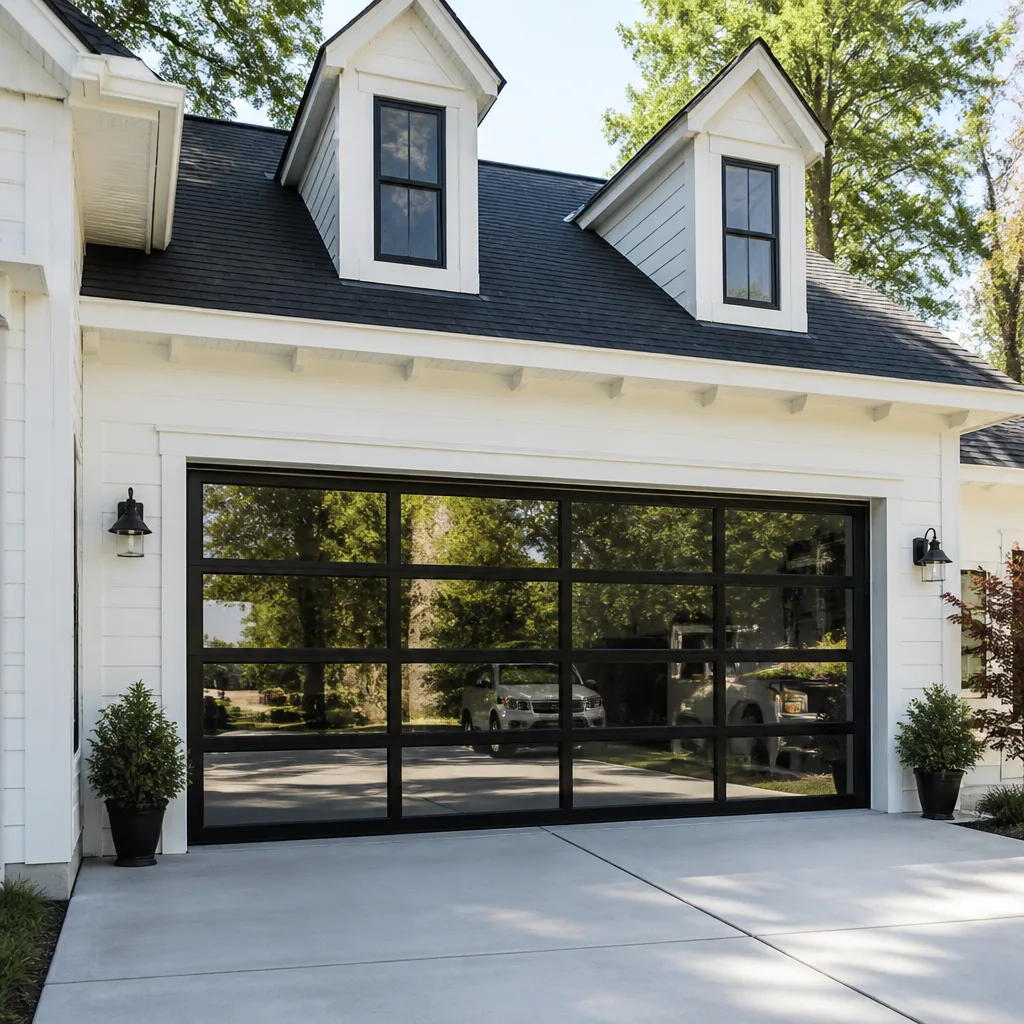 Full-view glass
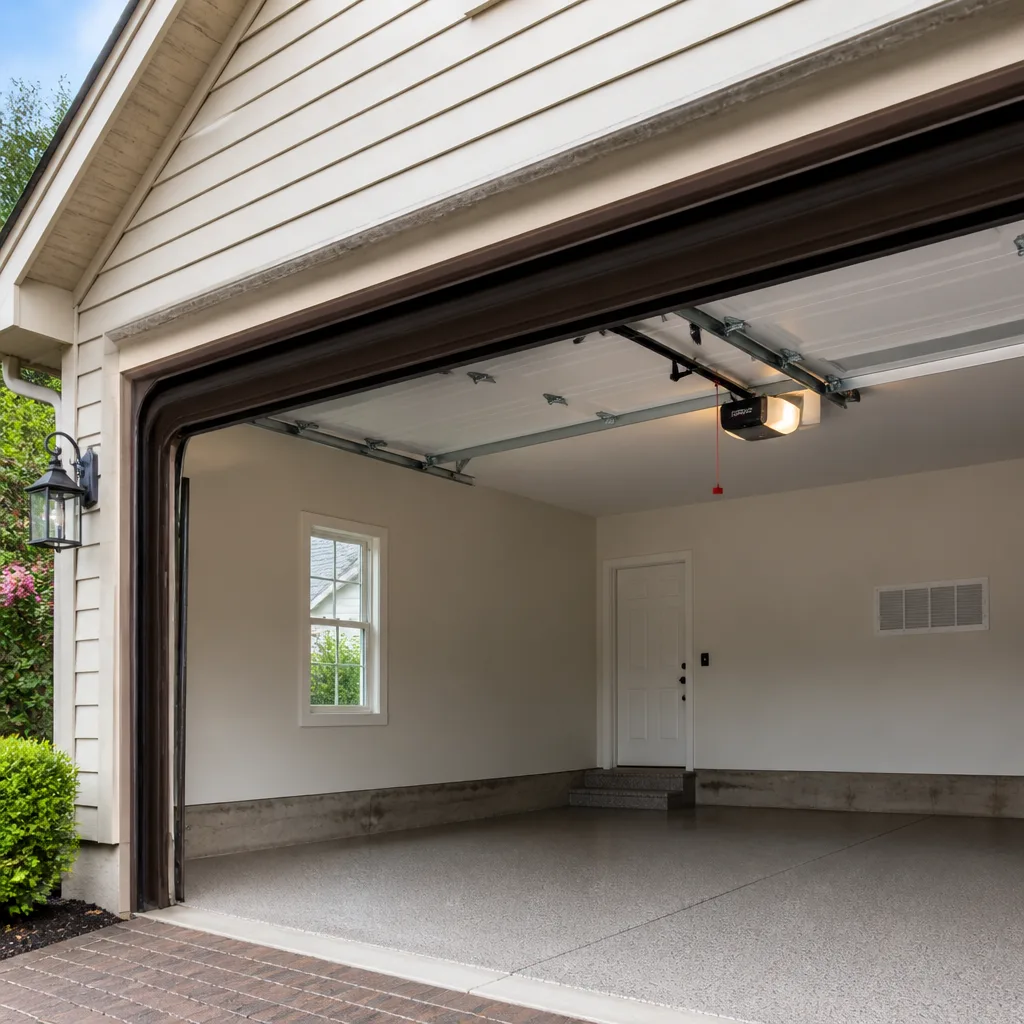 LiftMaster openers
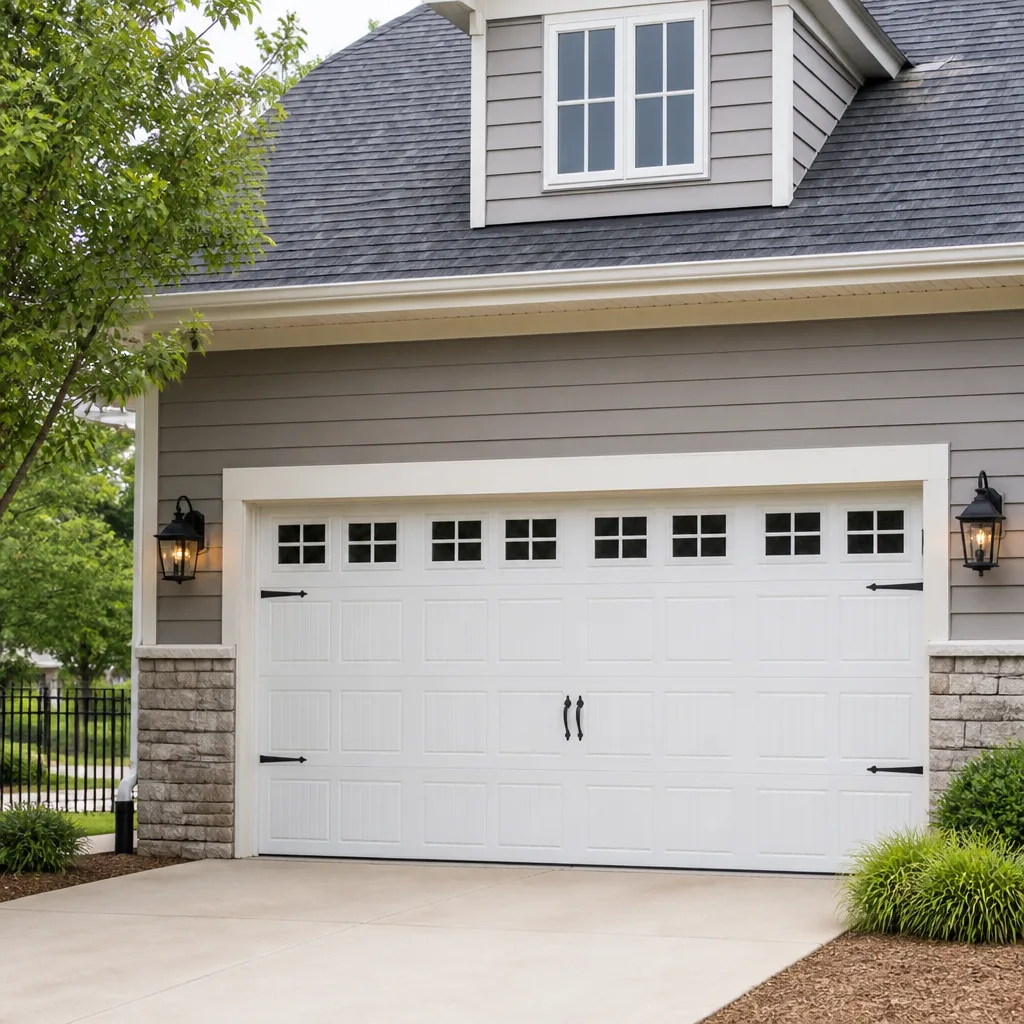 Chamberlain openers
Full 25-point door and opener safety check with every visit - springs, cables, rollers, tracks, and your LiftMaster or Chamberlain opener included
You get a price before we start. It does not change when the pro arrives.
Get your free estimateHow to Hire a Garage Door Contractor in Weston: A Step-by-Step Guide
Florida does not require a specialty license for garage door repair. That means anyone with a van and a socket set can legally take your money to fix your door, and many do. The trouble shows up later, when a spring fails at an awkward moment or a motor burns out, and you discover the work wasn’t permitted or the contractor had no insurance behind it. Hiring well in Weston comes down to a screening process: verifying the right license tier, confirming permits where they apply, and reading a written quote the way a contractor reads it. This guide gives you that process, step by step, so the person working on your door is accountable before they start.
Quick Answer
Hiring a garage door contractor in Weston means checking three things before anyone touches your door: the license tier that applies to repair versus replacement, whether the job needs a Broward County permit, and proof of both general liability and workers’ compensation insurance on a certificate. Ask what brands the contractor works on, how they handle torsion versus extension springs, and get the full price in writing before work starts. A good contractor welcomes all of it.
Styles & brands we work with
- Raised-panel steel
- Carriage house
- Modern flush
- Full-view glass
- LiftMaster openers
- Chamberlain openers
Table of Contents
- How does Florida contractor licensing work for garage doors?
- Repair or replacement: which license applies?
- When does a garage door job need a permit in Weston?
- How do you verify insurance, not just take a word for it?
- What a good written quote looks like (and the red flags in a bad one)
- Questions that reveal real brand knowledge
- Why spring work is a safety question, not just a repair
- Emergency work: what to ask before you need it
How does Florida contractor licensing work for garage doors?
Florida regulates contractors through the Department of Business and Professional Regulation (DBPR) and through county-level licensing. Garage door work sits in an awkward spot in that structure. There is no single specialty license called “garage door contractor.” Depending on the scope, the job may fall under a general contractor, a specialty structure contractor, or a local competency license issued at the county level. The point for a Weston homeowner is not to memorize every category. It’s to make sure the person you hire holds a license that actually covers the work.
The practical screening step is to ask which license they hold and then verify it. The DBPR runs a free public license lookup, and Broward County maintains its own licensing database for local competency licenses. You can search both in a few minutes. What you’re looking for is the license type, the status (active versus expired), and whether the scope matches what you’re asking them to do.
Here’s what to verify, in order:
- Ask for the license number in writing, not just a company name.
- Search that number on the DBPR site and confirm the status is active.
- Check whether the license covers installation and structural work, or only minor repair.
- For county-level licenses, search the Broward County records as well.
- Note the license holder’s name on the record and confirm it matches the entity quoting you.
A contractor who hesitates on any of that is telling you something. Licensing is the first filter, and it costs you nothing but a few minutes to run it. If you’re already dealing with a broken door and need garage door repair quickly, the same screening still applies; urgency doesn’t change who’s accountable for the work.
Repair or replacement: which license applies?
The license question gets sharper when you separate repair from replacement. Swapping a spring, adjusting a track, or replacing a roller is maintenance-level work that many licensed handyman and specialty contractors can perform. Replacing an entire door, changing the opening size, or altering the structural header that supports the door is construction work that generally requires a licensed contractor and often a permit. These are not the same job, and they don’t carry the same risk.
When you’re calling around Weston, ask the contractor to classify the job for you. Something like: “Is what I’m describing a repair or a replacement under your license?” A straight answer tells you the contractor knows the line. A vague answer, or “we can do anything,” is a warning sign.
Repair-level work typically includes:
- Spring replacement and cable adjustment
- Track alignment and roller replacement
- Hinge and weather seal replacement
- Opener repair and remote or keypad reprogramming
Replacement and structural work typically includes:
- Full door replacement, same or different opening size
- Any change to the supporting header or framing
- Removing or adding an opener where new wiring is required
- Changing door type from a standard sectional to a carriage or custom door
If you’re replacing a worn garage door opener alongside a new door, that’s often still repair territory. If the job is a whole new door, treat it as construction and expect the contractor to know the permitting side of it. Full-service companies handle both, which is why we cover repair, opener work, spring replacement, and installation under one roof in Weston. One call covers it instead of two contractors arguing over where one job ends and the next begins.
When does a garage door job need a permit in Weston?
Permit requirements for a typical garage door repair are light. Routine maintenance, like replacing a spring or adjusting a track, generally doesn’t require a permit. Full door replacement and any job involving structural changes almost always do. Weston sits within Broward County, and the City of Weston has its own building department that administers permitting on top of the county rules. The safe answer, when you’re unsure, is to call the city’s building department directly and ask about your specific job. That call is free, and it settles the question.
Why it matters: unpermitted structural work can become a problem at the worst possible moment. It can surface in a home sale inspection, when an insurer reviews a claim, or when a warranty inspection is scheduled. Pulling a permit is a sign of a contractor who plans for the future rather than the invoice. A permitted job also means an inspector looks at the work before it’s signed off, which is a check you otherwise wouldn’t get.
Here is how to confirm the permit before any work starts:
- Ask the contractor directly: “Does this job require a permit in Weston?”
- If yes, ask who pulls it. The answer should be the contractor, not you.
- Ask for the permit number once it’s issued. It’s a public record, so ask.
- Call the City of Weston building department to confirm the permit is open and matches the scope.
- Don’t accept a “we’ll handle it after” answer. Permits go before work, not after.
When you’re calling around on Weston Garage Door Repair Pros, permit questions are part of how we scope a job. It’s not a sales pressure tactic; it’s the same information your inspector will eventually want to see.
How do you verify insurance, not just take a word for it?
Ask for a certificate of insurance and then read it. A contractor can say “we’re fully insured” in ten seconds, and it means nothing without a document. What you want is a current certificate showing two specific coverages: general liability and workers’ compensation. The first protects your property if something gets damaged during the job. The second protects you if a worker is injured on your property. Without workers’ comp, a worker’s injury could come back to you, which is not a risk worth carrying to save a few dollars.
Here is what to look for on the certificate:
- Named insured: the company you’re hiring, not a different entity
- Dates: policy is active now, not expired
- General liability: limits listed clearly, not blank
- Workers’ compensation: active coverage, not an exemption for a one-person shop if you’re hiring a crew
- Certificate holder: you can ask to be listed as an interested party on the certificate
If the certificate is unclear, ask the contractor’s insurance agent to confirm the policy over the phone. A legitimate policy has a named agent and a policy number, and confirming takes about five minutes. If the contractor balks at that, move on. In our experience, the contractors with good insurance are the ones most willing to show it.
What a good written quote looks like (and the red flags in a bad one)
A written quote is the whole game. Everything else is a conversation until somebody puts the price in writing. A real quote shows line items, the brands and model numbers of any parts being installed, the labor, and the warranty terms. Vague one-liners like “fix garage door: $675” tell you nothing. A good quote tells you exactly what’s being replaced, with what, and for how long the work is covered.
A quote should show these elements:
- Line-item pricing for parts and labor, not one lump sum
- Specific brand and model of door, opener, or springs being installed
- Warranty terms in writing, including what happens if the same part fails
- The license number of the contractor
- Permit cost and who’s responsible for pulling it (if applicable)
- A clear statement that the final price is the written estimate, not a starting point
Red flags to walk away from:
- Cash only, no receipt: no paper trail, no warranty, no recourse
- Pressure to sign before paperwork is shown: a legitimate contractor gives you time to review the quote
- No written warranty: springs and openers carry manufacturer warranties; the installer should pass them through
- Price jumping on arrival: if the price on the invoice differs from the written quote without a clear explanation, that’s a bait-and-switch
- No license number on the quote: you can’t verify what you can’t see
When a spring breaks in a Weston home, it’s often the middle of the day and you want it fixed now. Urgency is exactly when vague quotes slip through. The written estimate sets the final price, and you should compare it to any other quote you have before work starts. Being able to compare brands matters too; a contractor who handles Amarr and Wayne Dalton will quote the same job differently than a contractor who only installs one product line.
Questions that reveal real brand knowledge
Brand knowledge is a real hiring filter, not just a nice-to-have. A technician who has installed and serviced a specific brand by hand knows its quirks: how the torsion spring load is set, which opener models use which logic boards, and which doors tend to have hinge or roller issues sooner. A generalist with a socket set can work on a door, but they’re learning on yours. Asking a few brand-specific questions in the estimate call will tell you which situation you’re in.
Try these questions:
- “Does my door use torsion or extension springs, and how does that change the replacement?”
- “What brand is my opener, and what’s the logic board replacement cost on that model?”
- “If I upgrade my opener, do you install LiftMaster and Chamberlain, or do you work with other brands?”
- “What’s the difference between an Amarr and a Wayne Dalton door in my size and style?”
- “Which springs do you stock for my door type, and which ones do you have to order?”
- “What’s the typical timeline from order to install for a replacement door?”
Notice that none of these questions are traps. A knowledgeable contractor welcomes them and can answer in plain language. A company that fumbles on the torsion-versus-extension question or can’t name the opener brand in your garage probably shouldn’t be the one working on it. We work on the eight brands most often found in Weston homes: LiftMaster, Chamberlain, Genie, Clopay, Amarr, Wayne Dalton, Craftsman, and Raynor. If your door was installed by a builder, there’s a good chance one of those names is on your opener or on the door itself. Look before you call, and you’ll get a more specific answer.
Why spring work is a safety question, not just a repair
Garage door springs are under constant tension, and the load on a residential door spring can be hundreds of pounds. When a spring fails, it releases that energy in a fraction of a second. That’s why spring work is one of the most skill-dependent garage door repairs, and why we treat it as a safety job rather than a routine swap. A door that looks fine can have a compromised spring, and the wrong adjustment can turn a minor problem into a serious one. We don’t recommend diagnosing or adjusting springs yourself. That’s a job for a trained technician with the right tools and the right precautions.
A few signs the spring is the problem:
- The door opens a foot or two and stops
- The door feels unusually heavy when lifted by hand
- You hear a loud snap from the garage
- There’s a visible gap in the spring above the door
- The door slams down instead of lowering smoothly
If any of those sound familiar, get the door checked before using it again. We offer garage door spring repair as a dedicated service because it’s the one job where experience matters most, and it’s the one that’s most often treated as a commodity. It’s not. A spring job quoted at a suspiciously low price is usually a sign that the wrong spring is being used or the safety checks are being skipped.
Emergency work: what to ask before you need it
An emergency door failure is not the time to be screening contractors for the first time. The door won’t close at night, or it won’t open when you need to leave for work, and you want a number to call. That’s why it’s worth deciding who to call before the emergency happens. Ask a few questions on a routine call or estimate, and you’ll know whether the company’s emergency service is a real capability or a line on a website.
Ask these questions on a routine call:
- “If my door fails on a Sunday, what’s your process?”
- “What normally breaks on a door like mine, and how often?”
- “What’s your standard diagnostic fee if you come out and the fix is quick?”
- “Are you familiar with the brand of opener I have?”
- “Do you work weekends if I’m stuck?”
Emergency service is a standing capability, not a seasonal add-on. We treat it that way. Fridays and evenings are the common failure windows, and the fix is often the same as a routine repair – a spring, a cable, or an opener logic board – just done under pressure. Deciding who to call in advance takes the panicked guesswork out of the moment.
Common Mistakes to Avoid
- Hiring on price alone. A quote that’s a few dollars lower than the next one isn’t a bargain if the job needs redoing in six months. Compare what’s included in each quote, line by line, not just the total at the bottom.
- Not checking the license tier. In Florida, the license number matters because different tiers cover different work. Verify it against the DBPR and Broward County databases before you sign.
- Assuming all work needs a permit. A spring swap usually doesn’t. A full replacement usually does. Asking City of Weston building department up front saves you a headache later.
- Skipping the insurance certificate. “Fully insured” means nothing until you’ve seen the certificate. If a worker is injured in your garage, workers’ comp is what keeps that on the contractor’s side of the line.
- Paying in cash with no receipt. Cash-only requests with no paper trail leave you with no recourse if the door fails and no path to enforce the warranty.
- Accepting a vague quote. If the quote says “fix door” with a single price, ask for a line-item breakdown. A contractor who can’t itemize is a contractor who can’t be held to a scope.
- Not asking about brand experience. A technician who has to look up the spring on your Amarr door isn’t the right person for the job. Ask first; the answer is free.
- Waiting for a total failure to look for a contractor. Springs and openers give warning signs. A repair on a failing spring costs less and is safer than an emergency repair on a broken one.
See the difference
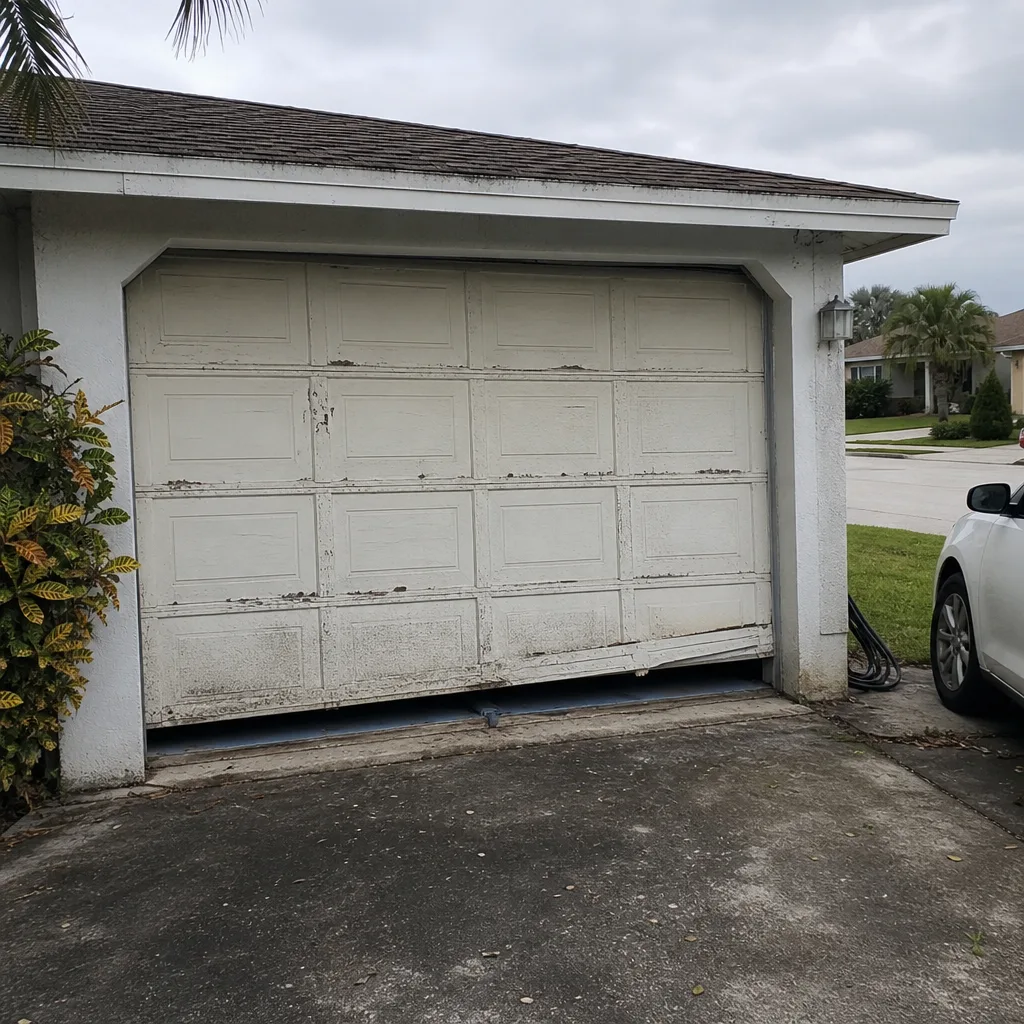 Before
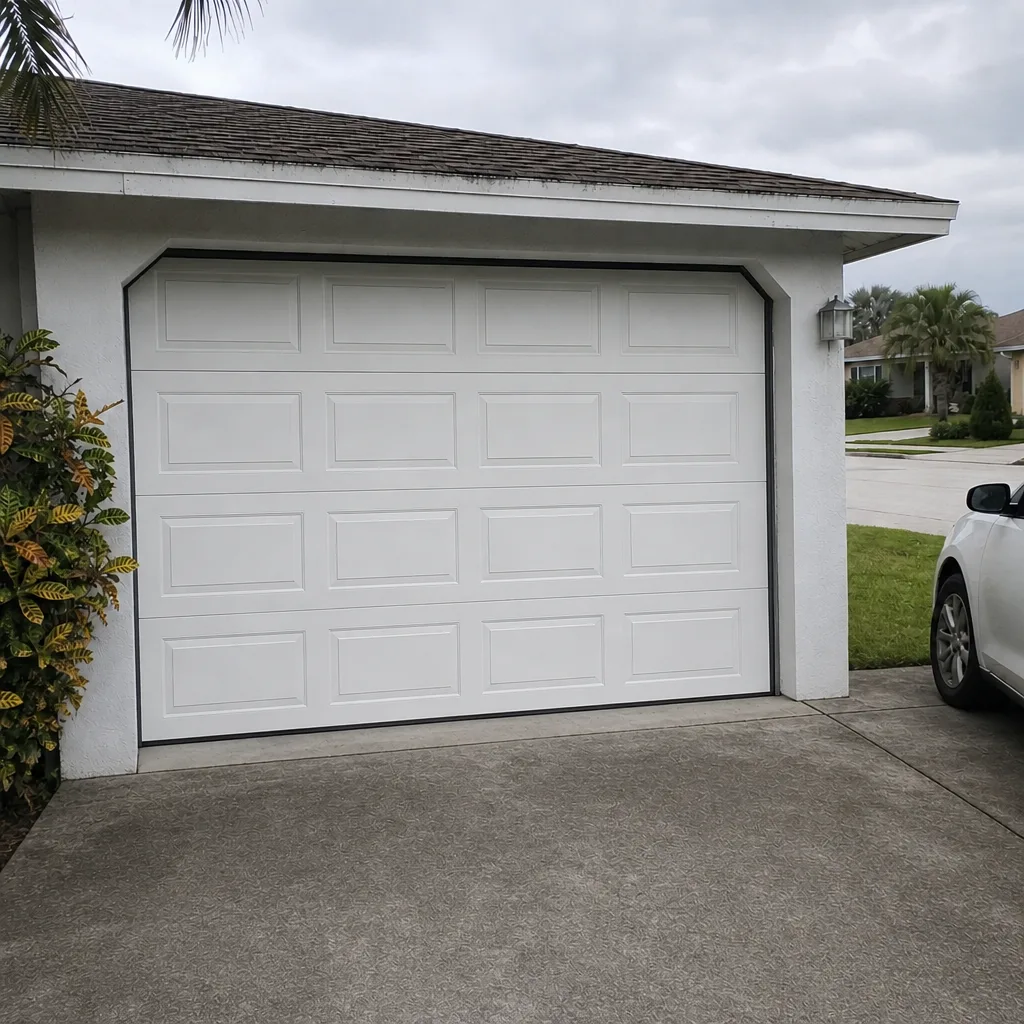 After
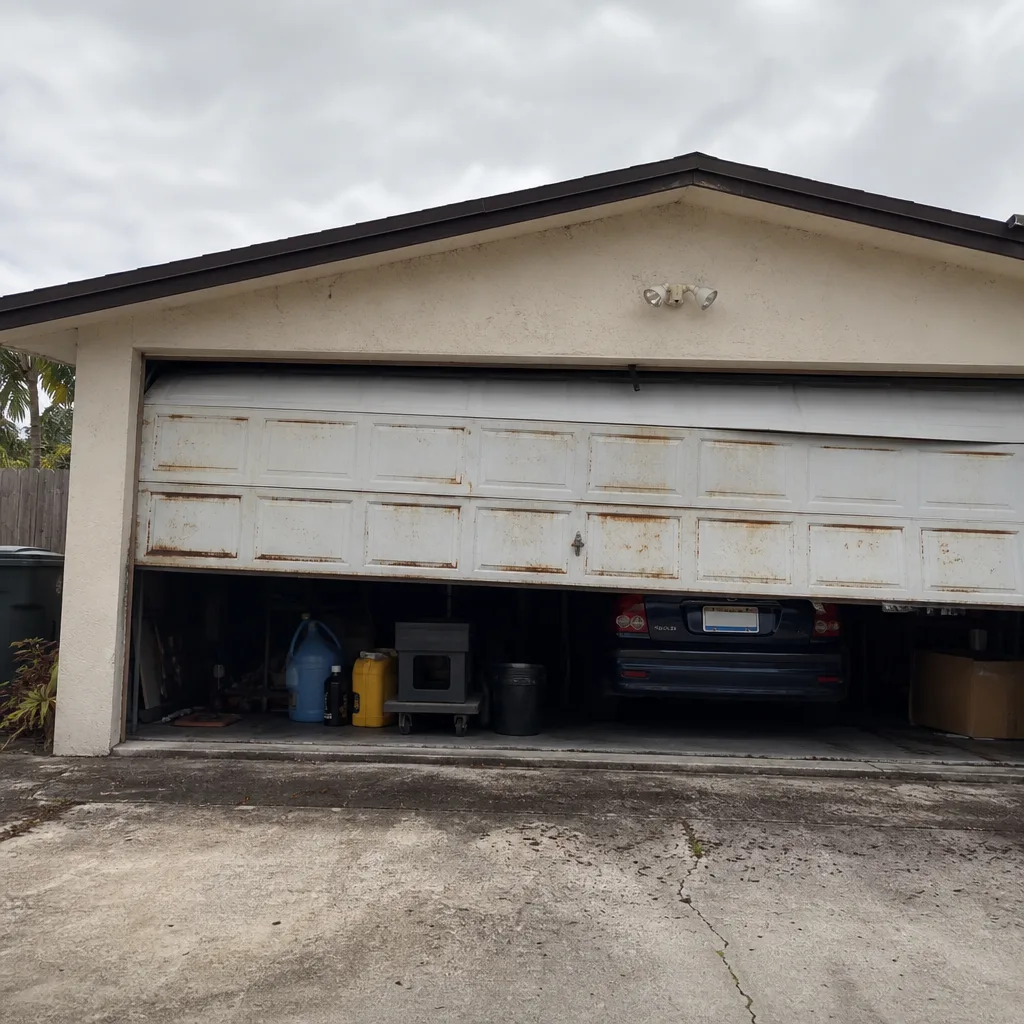 Before
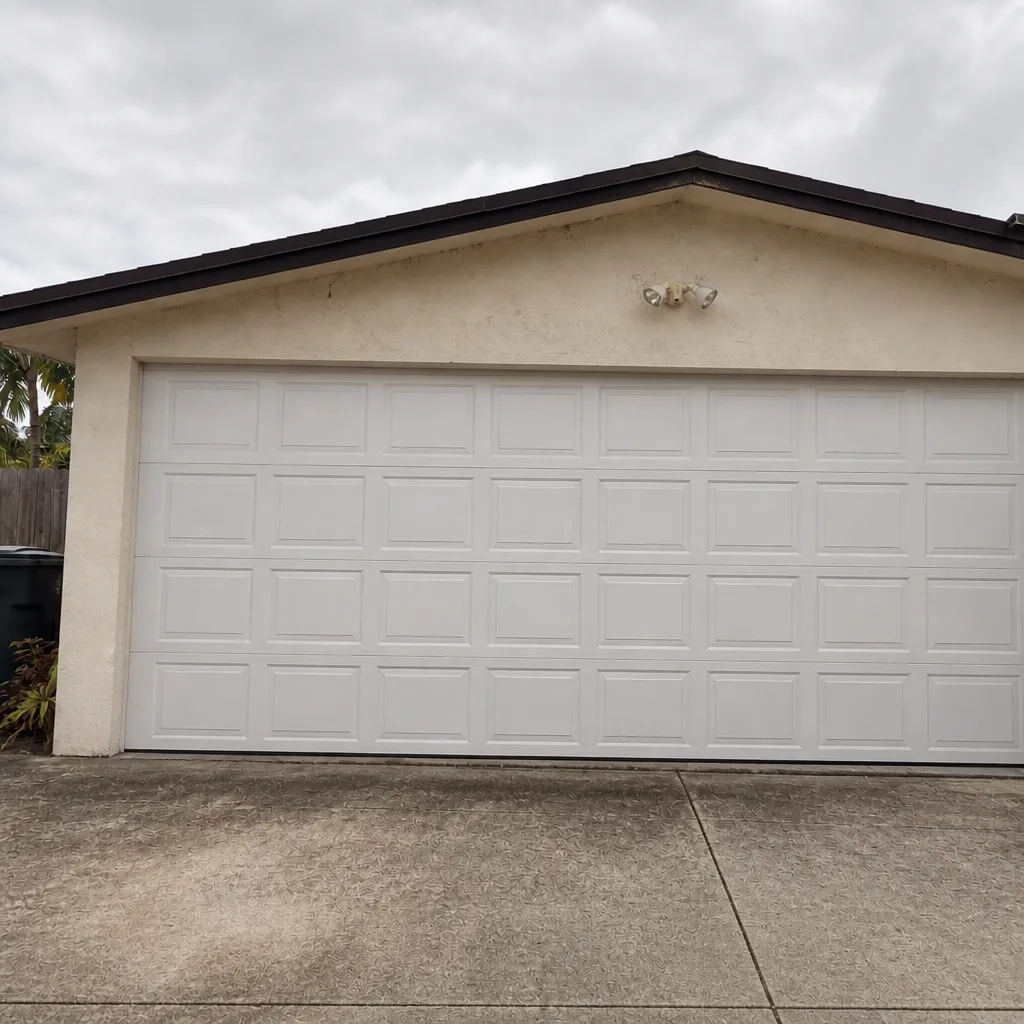 After
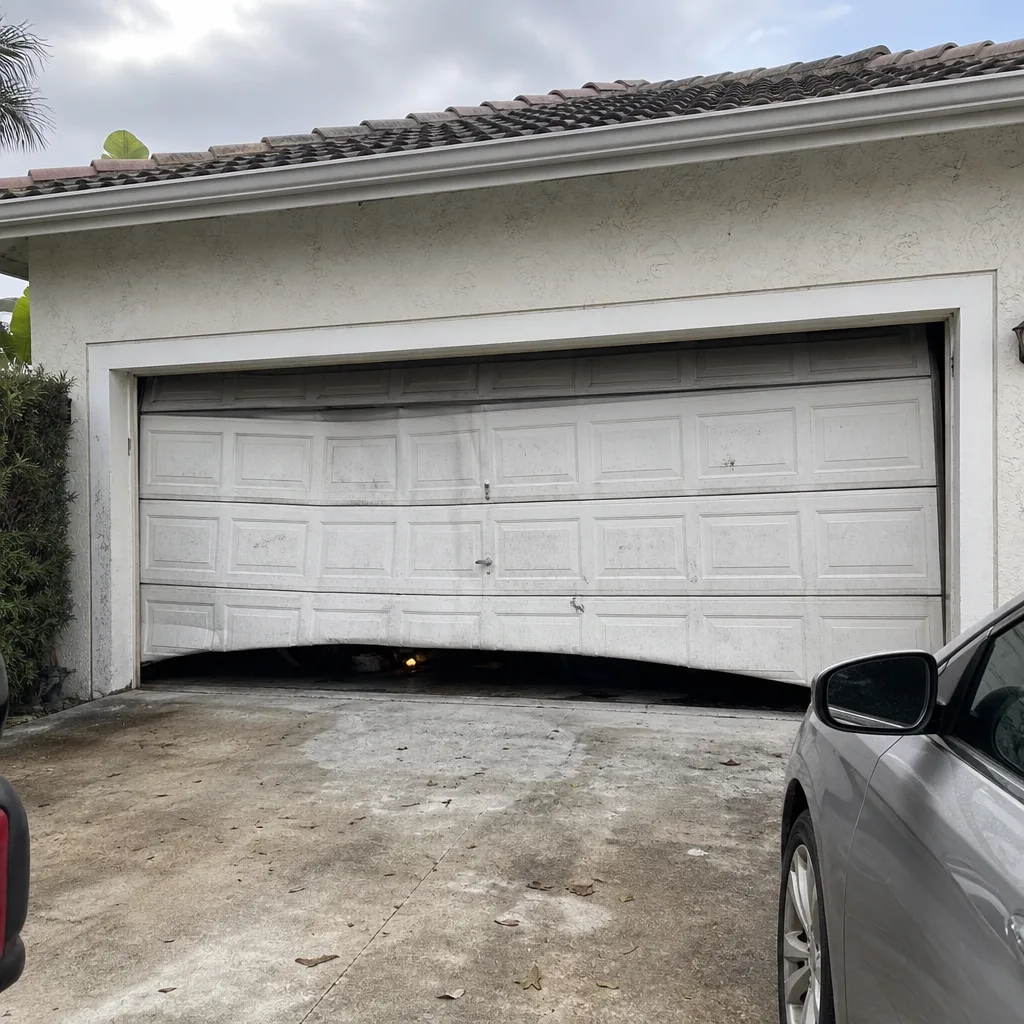 Before
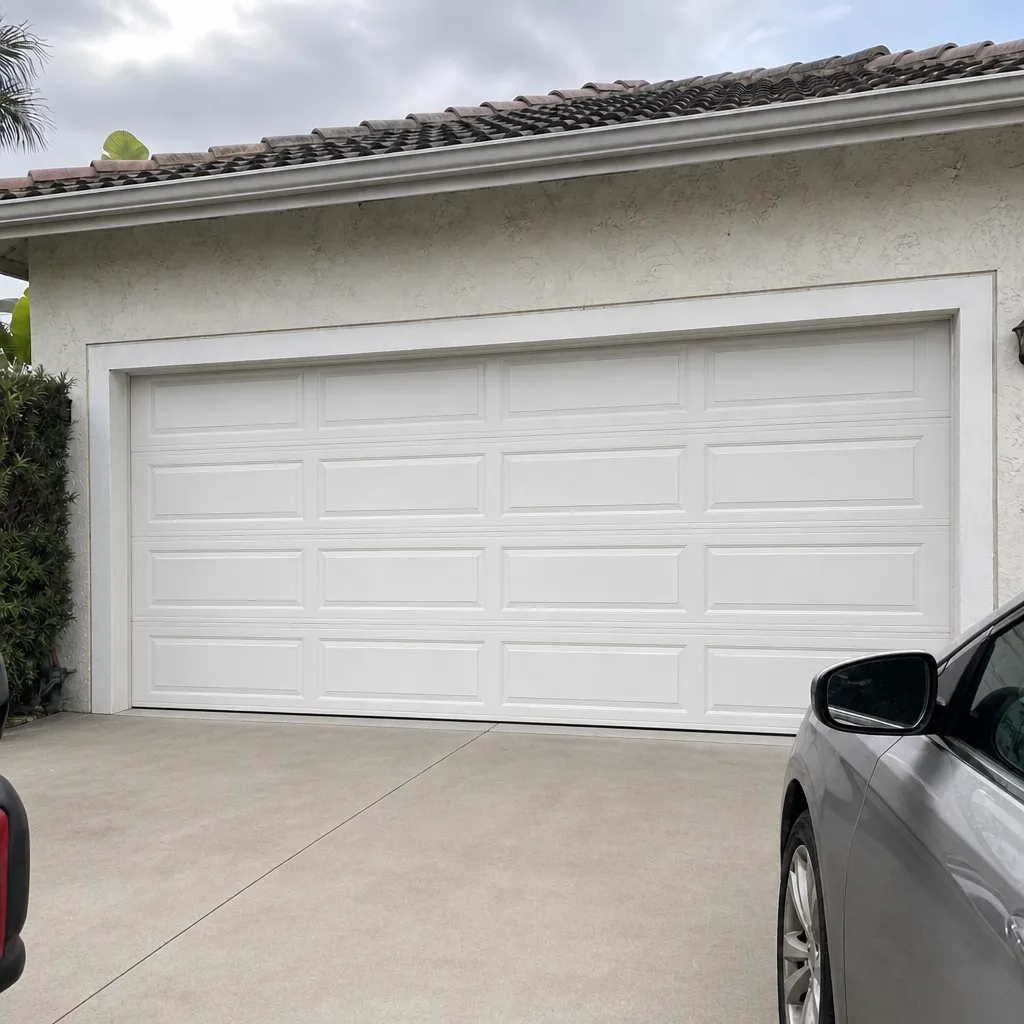 After
When to Call a Professional
Some garage door work is straightforward. Others are genuinely dangerous and worth a call even if the temptation is to reach for a YouTube tutorial. Call a professional when a spring breaks or looks compromised, when the door lifts unevenly or the cables look slack, when the opener runs but doesn’t move the door, or when the door is heavier than it should be by hand. Call immediately if the door won’t close fully, since that’s a security question as well as a mechanical one. Call for any replacement job, too; that’s a measured, ordered, scheduled job, and getting the brand and sizing right matters. Weston Garage Door Repair Pros offers free estimates in Weston – call (833) 847-7527. The written estimate sets the final price, and you’ll know exactly what the job involves before anything starts.
Frequently Asked Questions
Florida doesn’t have a dedicated garage door license, but the work is still regulated. Repair work typically falls under a general contractor, specialty structure contractor, or local competency license, and you can verify any of those through the DBPR and Broward County databases. Ask for the license number in writing and check it before signing.
Full replacement generally requires a permit in Weston, and repair work like a spring swap usually doesn’t. Confirm with the City of Weston building department for your specific job, and ask the contractor who pulls the permit. The contractor should pull it, not you.
Spring repairs in the Weston area typically run in the range of a few hundred dollars for a single spring, with a matched pair costing roughly double that since they’re usually replaced together. The written estimate sets the final price. Call (833) 847-7527 for an exact quote; estimates are free.
No. Garage door springs are under constant, heavy tension, and a failed spring releases that energy instantly. Adjusting or replacing a spring without the right tools and precautions can cause serious injury. This is a job for a trained technician, and it’s not a DIY repair.
Ask for a certificate of insurance and read it. Confirm the named insured matches the company you’re hiring, the policy is currently active, and it covers both general liability and workers’ compensation. If anything is unclear, ask the contractor’s agent to confirm the policy over the phone.
Ask about the brands on your actual door and opener. Common names in Weston homes include LiftMaster, Chamberlain, Genie, Clopay, Amarr, Wayne Dalton, Craftsman, and Raynor. A contractor who can speak specifically about the brand in your garage is a better hire than one who speaks in generalities.
A replacement involves measuring the opening, ordering the door from the manufacturer, and scheduling installation, so it’s rarely the same day as the estimate. The written quote should include the expected timeline. Allow for order and delivery between the estimate and the install date.
The Bottom Line
Hiring a garage door contractor in Weston comes down to verification, not gut feel. Check the license tier for the specific job, confirm permits where they apply, read the insurance certificate with your own eyes, compare line-item quotes, and ask brand and spring-specific questions that only a real specialist can answer. These steps take an afternoon and they’re worth every minute. The right contractor will welcome the questions; the wrong one will dodge them. Once you’ve screened and signed, the written estimate is your protection. If you want to start the process with a free estimate and an itemized quote, call (833) 847-7527 and we’ll walk through the job together.
Written by the team at Weston Garage Door Repair Pros.